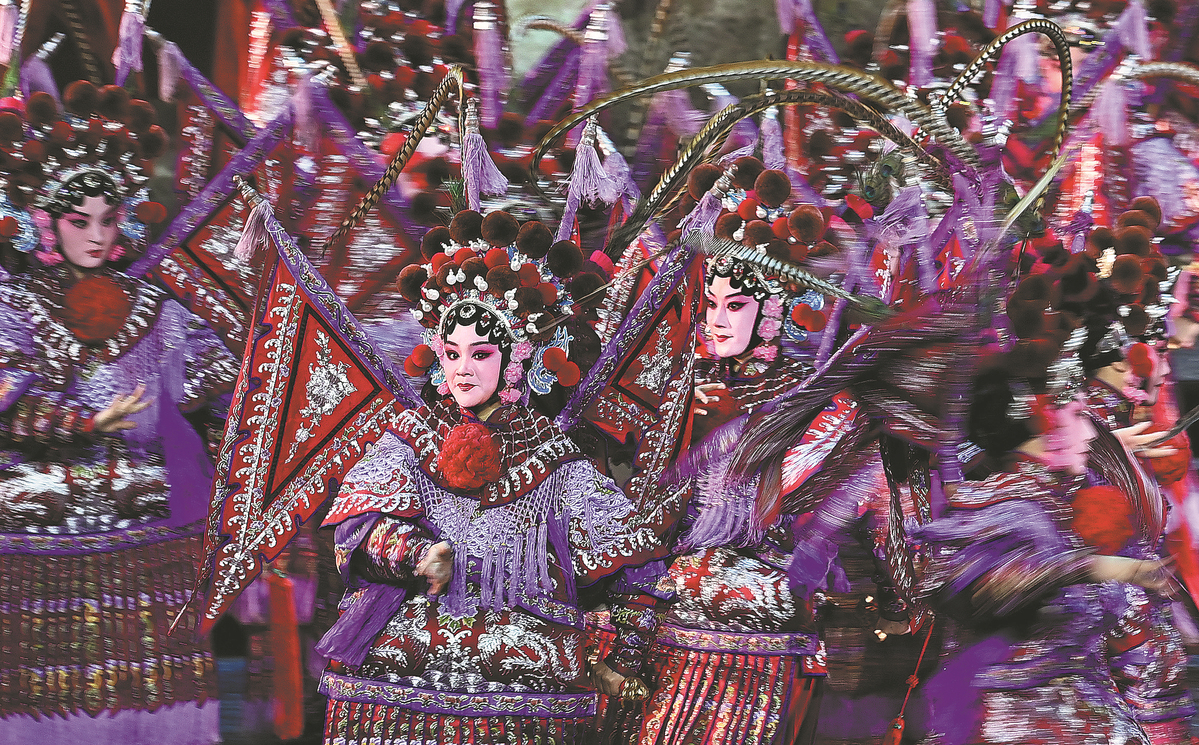
Qinqiang Opera
Overview
Qinqiang Opera, also known as Qinqiang, is a traditional Chinese opera form originating from the Shaanxi province. It is one of the oldest and most significant Chinese operatic genres. The opera is recognized for its historical depth, cultural richness, and distinctive musical and performance styles.
Historical Background
Qinqiang Opera finds its roots in the People's Drama of the Shaanxi-Gansu-Ningxia Border Region, which was established in 1938. During the tumultuous periods of the War of Resistance Against Japanese Aggression (1931-45) and the War of Liberation (1946-49), artists within the region created many notable operas, such as Chinese Soul, Twelve Sickles, Hatred of Tears and Blood, and Hatred of the Poor.
Post-1950s, the operatic landscape evolved, presenting works like Visiting West Lake, The Orphan of Zhao Family, and Liang Qiuyan. These operas, along with several others, became highly influential and contributed to the cultural fabric of the region. Significant among these was The First Emperor, which won multiple performance and individual prizes at the National Chinese Opera Emulation.
Shaanxi Opera Troupe
The formation of the Shaanxi Opera (Qinqiang) Troupe in October 1958 marked a significant milestone in preserving and promoting Qinqiang Opera. Established from the Jueming Society and Gengchen Club, the troupe has been a custodian of cultural heritage, presenting over fifty original and adapted plays of various scales.
Among their notable works is the Meihu Opera The Baby of Mother and Son's Wife, which received accolades at the Invitational Performance of National Contemporary theme of Traditional Opera in 1991. The Beggar Conferred on by Emperor, a Xia Opera, was another celebrated work, securing multiple prizes at the National Theatrical Festival Excellent Program in 1992.
The troupe's leading artists, including Wang Zhijie, Ma Guifen, Wang Zemin, Si Cunrei, and Xu Jiuru, have played pivotal roles in maintaining the operatic traditions and enhancing its appeal.
Artistic Characteristics
Qinqiang Opera is characterized by its powerful and passionate vocal style, which is a cornerstone of its performance. The opera often incorporates historical and social themes, reflecting the cultural and historical milieu from which it originates. The singing style is noted for its use of Yangdiao, Erban, Kubin, and Erhuang, which are chief types of vocal music in traditional Chinese operas. Article reference1. Qin Opera Troupe of Ningxia Hui Autonomous Region. chinaservicesinfo.com. 20172. Qianju Opera of Guizhou Province. chinaservicesinfo.com. 20173. Chinese Opera Institute of Shaanxi Province. chinaservicesinfo.com. 2017Photo Gallery(8 pictures)CategoriesRegional CultureTagOpera and DramaRelatedPuju OperaYellow River National Cultural Park29th National Book ExpoLanzhou CityCatalogue1. Overview2. Historical Background3. Shaanxi Opera Troupe4. Artistic Characteristics- - - []








